🛡️ The Security Reason Nobody Talks About
You hear something. It might be the house settling. It might be the cat. It might be someone at your front door or inside your kitchen. You do not know, because you are lying in bed in complete darkness and you cannot see anything beyond the foot of your bed.
You have a few options, and none of them are good. You can lie there and listen, heart pounding, unable to gather any information at all. You can get up and move through your house in the dark, which is both a fall risk and a tactical mistake — you are blind, and if there is someone there, they may not be. You can turn on an overhead light, which announces exactly where you are and that you are awake. Or you can call the police or a family member, which feels foolish if it turns out to be nothing — and most of the time it is nothing — but you have no way to know that.
⚠️ Older adults are specifically targeted for a reason. Burglars who target occupied homes look for vulnerability. Older adults are known to sleep more deeply due to medications, to have reduced hearing at night, and to be less able to respond physically to a confrontation. These are not assumptions — they are known factors that make older adults more attractive targets for opportunistic break-ins. A home that is dark all night presents no visual deterrent to someone approaching a door or window. A home with a soft glow visible from outside — living room, hallway, kitchen — suggests someone is awake or active. That alone changes the calculation for an opportunist.
What night lights actually give you
When your front room, kitchen, hallway, and entry are all running a low steady glow all night, you gain something that no alarm system by itself provides: immediate visual information from the safety of your bedroom doorway.
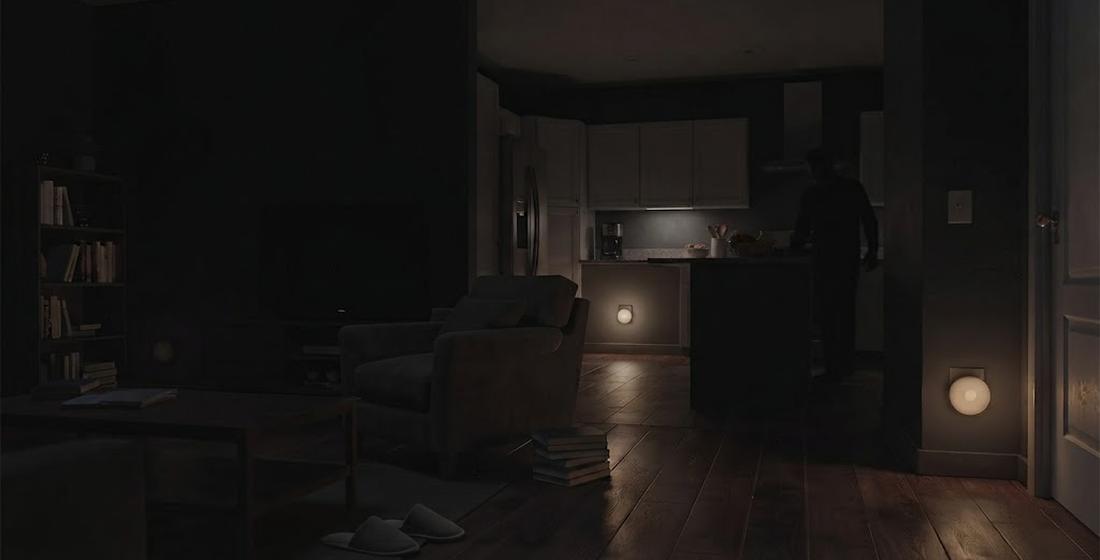
Someone is in your kitchen. You can see there is a figure. You cannot tell who it is, how large they are, what they are doing, or whether they are moving toward you. You have no information. You cannot call for help effectively because you do not know what to report. You cannot take any protective action because you cannot see. They can see you — the light from your bedroom doorway is behind you. You are at a complete disadvantage in your own home.
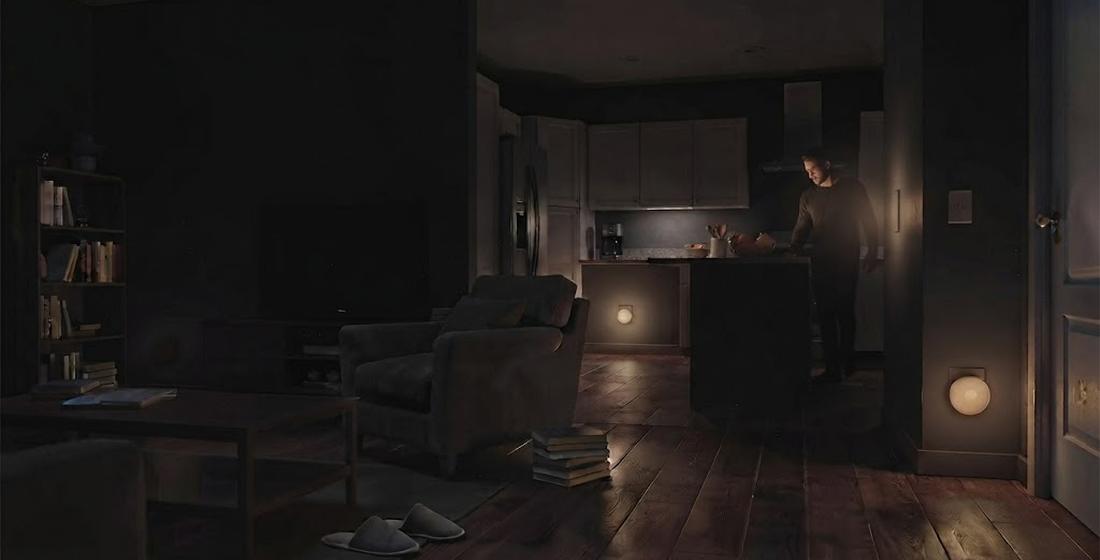
Someone is in your kitchen. You can see exactly where they are, which direction they are facing, and what they are doing. You have information. You can call 911 and describe the situation clearly — where the person is, what they look like, which direction they are moving. You can stay in your room, lock your door, and wait for help. You know your home. You can see it. That knowledge is the difference between helpless and capable in the worst moment of the night.
You open your bedroom door. You can see down the full length of your hallway. You can see whether the front room is disturbed. You can see the kitchen entry. You can see the front door. If something looks wrong, you know it in seconds — and you know it before you have left the safety of your room. If nothing looks wrong, you know that too. You can go back to bed without calling anyone, without feeling foolish, and without having stumbled around in the dark.
That is information. Information is what lets you make a decision. Darkness takes that away from you entirely.
💡 Even if you have a burglar alarm: An alarm tells you after the fact — after a door or window has been breached, after the sound has triggered the sensor, after the monitoring center calls you. Night lights tell you right now, from your own bedroom, by letting you see your home. The two work together. The alarm is a detection system. The night lights are your eyes. You need both.
The psychological weight of darkness
There is a cost to lying awake in a dark house uncertain whether someone is there. It is not just anxiety in the moment — it is cumulative. Older adults who live alone or whose partners sleep heavily report that the fear of intruders disrupts their sleep regularly, that they lie awake listening to sounds they cannot identify, and that they feel genuinely helpless in those moments because darkness has removed every option except waiting.
Night lights do not make your home impenetrable. Nothing does. What they do is restore your ability to assess your own situation — which is the foundation of any reasonable response. You cannot call for help effectively if you do not know whether you need it. You cannot take any protective action if you cannot see. A home lit at low glow all night gives you your eyes back at the moment you need them most.
🔒 The Locked Bedroom Door — The Cheapest Second You’ll Ever Buy
The lights on this page help you see on an ordinary night. This section is about the other kind of night — the one where the sound in your house is not the cat — and it is built around a true story and a habit that costs nothing.
🔒 He Did Everything Right — Citrus County, Florida
“A man we know did nighttime security the way this website preaches it. Wireless alarm system. Soft LED lights through the whole house, every room navigable in the dark. And one habit his father gave him fifty years ago: he locked his bedroom door every single night. Not because he was afraid. Because it was the habit.
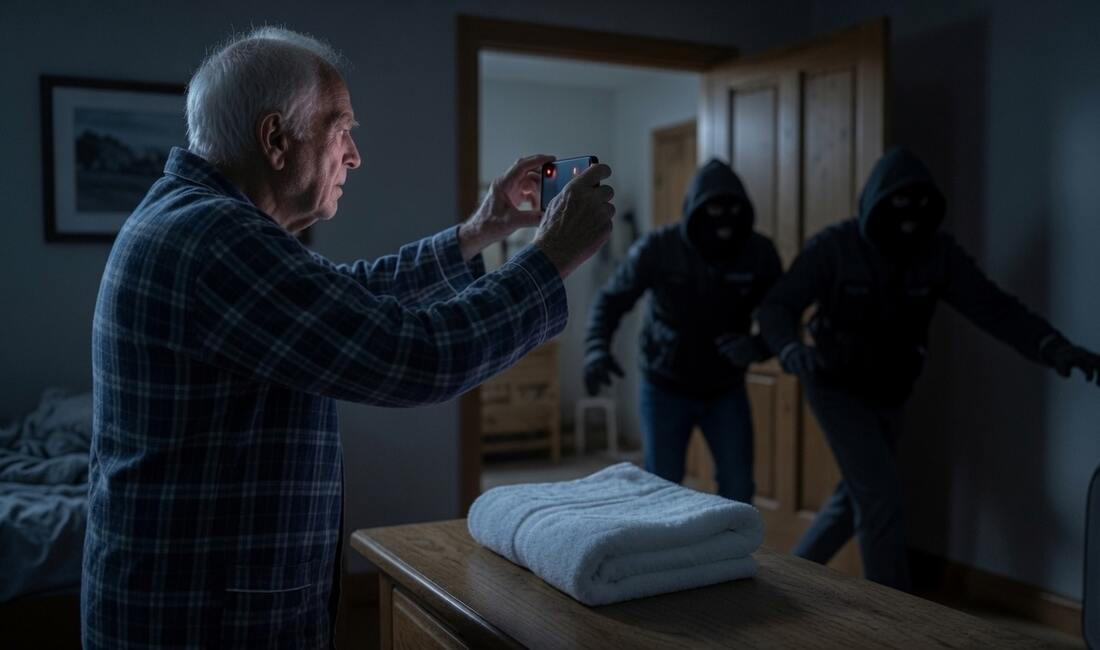
Three young men bypassed the alarm and got in. He heard them — and because he heard them, he was already dialing 911 when they came down the hall. Then they tried his door. It was locked. And that locked handle threw them off — for a second. Just a second. They kicked the door in. But the second was already spent where it mattered: his address was given, the dispatcher was on the line — and he had done one more thing. He had his phone’s camera pointed at the door. To this day he does not know if the pictures came out. It did not matter. What three men saw when that door gave way was a man calmly talking to 911 with a camera aimed at their faces — and they turned and fled.
He will tell you plainly: the alarm did not save him. The lights did not save him. A habit his father taught him — one thumb-turn every night for fifty years — bought the one second that did.”
— As shared with us, retold with permission, Citrus County, Florida
He is not an outlier, and neither is the advice. Police departments and security experts recommend locking bedroom doors as protection against home invasions, and the standard law-enforcement guidance for an intruder-in-the-home situation is exactly what he did: get behind a locked door, call 911, give your address first so dispatch has your location even if the call is cut short, and stay on the line. FBI statistics put a burglary in the United States at roughly one every 30 seconds — most when nobody is home, but “most” is doing real work in that sentence.
The way to think about it is layers, and what layers buy. No alarm, light, or lock stops a determined intruder. What each layer does is cost them a second — and seconds are the entire currency of a 911 call. His alarm failed. His locked door did not stop three men. But it paused them, and a pause was all the phone needed. That is the whole strategy on one sentence: you are not building a fortress; you are buying seconds.
Make the second count — the bedside setup:
- The phone sleeps on the nightstand, charging, every night — not in the kitchen. The locked door buys seconds; the phone across the house spends minutes you do not have.
- Address first, then details, stay on the line. Practice saying your address out loud once. Under stress, rehearsed words come out; unrehearsed ones do not.
- Lock the door as part of getting into bed — same motion as turning off the lamp, every night, so at 70 it is not a decision, it is a reflex. This site’s whole philosophy in one thumb-turn.
- The camera trick — only after the call is made. The man in the story pointed his phone’s camera at the door while he talked. He never learned whether the pictures came out, and it did not matter: what an intruder sees is a witness on with the police, gathering evidence. The call always comes first — the camera is what the same phone does with its spare second.
An honest word about the lock itself: the lock in that story was nothing special — an ordinary bathroom-style privacy lock, the kind already sitting on most bedroom doors, with the little emergency-release hole (or straight-slot) on the hallway side. Let’s be honest about what that means: anyone calm — with a coin, a small screwdriver, or half a minute of thought — can open one. That is by design, and it is a feature, not a flaw: it is how a firefighter, a paramedic, or your own family reaches you in a medical emergency. So why did it work? Because a person kicking a door at two in the morning is not calm and is not troubleshooting hardware. They hit unexpected resistance, and resistance costs them the only thing that matters — a second. The lock does not have to be strong. It has to be surprising. If yours has one, this entire section costs you nothing and starts tonight.
Want the delay to be longer? The upgrade is not a fancier knob; it is the strike plate. A $15 door reinforcement kit — a heavy strike plate with 3-inch screws that reach past the trim into the wall framing — turns a one-kick interior door into a several-kick door. Every kick is another sentence to the dispatcher. Households wanting more can step up to a keyed interior lever — just keep a spare key where a trusted family member can reach it, because the medical emergency where someone needs to get in to help you is far more common than the break-in.
The same habit protects you twice. Fire-safety researchers behind the “Close Before You Doze” campaign found that a closed bedroom door dramatically slows how fast fire and smoke reach a sleeping person — the difference between a survivable room and an unsurvivable one. And because interior locks open from the inside with the same thumb-turn, a locked door never slows your exit. One habit. Two ways home.
⚠️ The Fall Prevention Reason — Equally Real
Falls are the leading cause of injury-related death in Americans over 65. The most dangerous fall scenario is the most common one: getting up in the dark to go to the bathroom. The route you have walked a thousand times in daylight becomes genuinely hazardous at 2 AM when you are half-asleep, your vision is compromised, and urgency says hurry.
People who get up twice a night to use the bathroom have nearly twice the fall risk of people who sleep through. People who get up three or more times a night increase their hip fracture risk by approximately 80% over five years. Nocturia — waking to urinate — affects the majority of adults over 60. This is not a rare situation. It happens in your home, every night.
🏥 What a hip fracture actually means at 70: The average cost is over $30,000. Research suggests half of older adults who fracture a hip never regain their prior level of mobility, and approximately twenty percent do not survive to the one-year mark — not from the fall itself, but from the cascade of complications that follow surgery, bed rest, and reduced activity. Individual outcomes vary significantly. A hip fracture is not just a broken bone. It is often the beginning of a trajectory that changes independence permanently.
A low-glow LED night light running all night removes darkness from the path. The floor is always visible. The bathroom door is always findable. Your foot lands where you expect it to land. That is all it needs to do. And the same lights that protect you on the way to the bathroom at 2 AM are the same lights that let you see your living room when you hear a sound at 3 AM. One set of lights. Two critical functions.
💬 The Stories Behind the Decision
“I live alone. I have for eleven years since my husband passed. Most nights are fine. But there are nights where I hear something — a car door, a branch, something I cannot identify — and I lie there in the dark not knowing whether to be afraid or not. The dark is the problem. I cannot see anything. I cannot tell if my front door looks normal or if something is wrong in the living room. I am just lying there with no information at all.
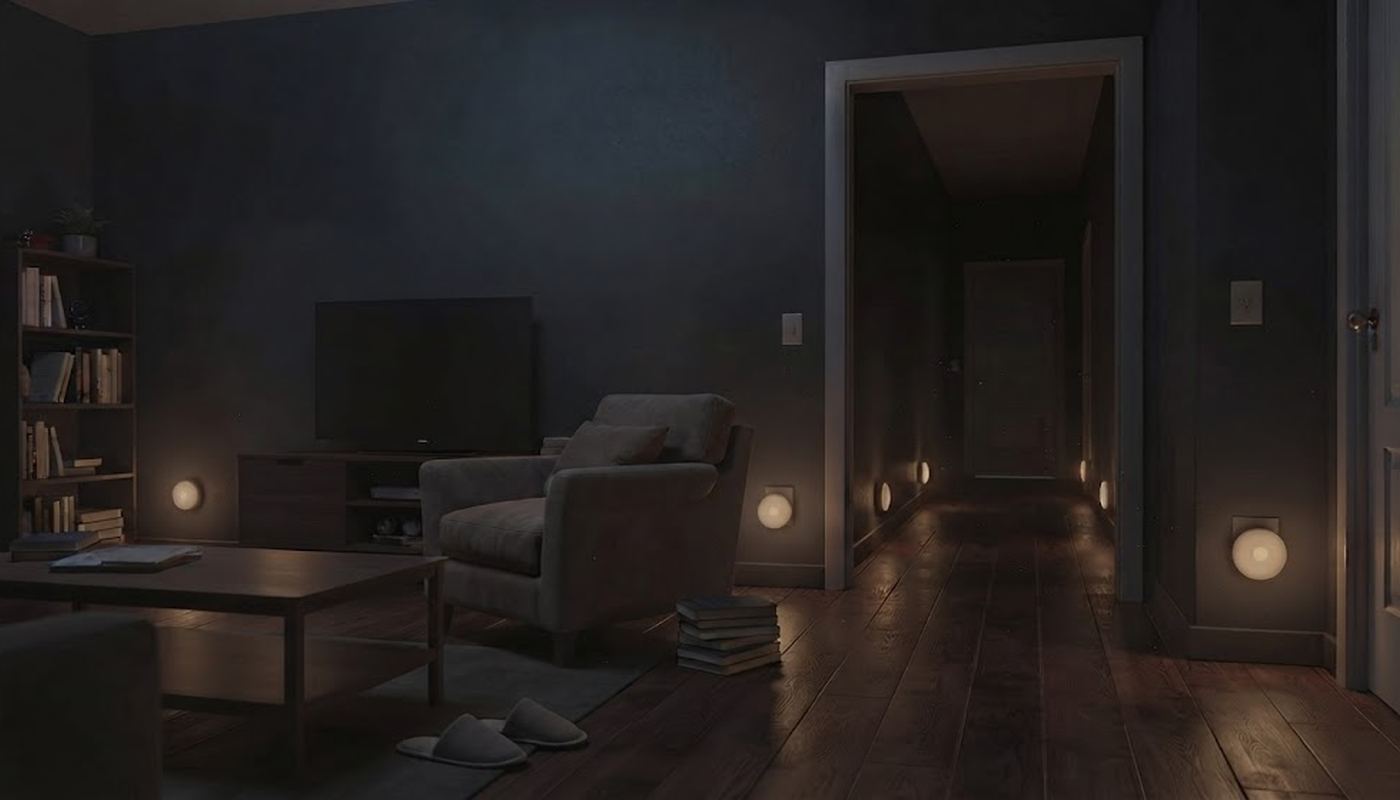
My daughter put six night lights in when she visited. Warm white, soft glow, they turn themselves on at dark and off at dawn. One by the front door. One in the kitchen. Two in the front room. One in the hallway. One near the toilet.
The first time I heard something after that, I opened my bedroom door and looked down the hallway and could see the front room was exactly as I had left it. Nothing disturbed. I went back to bed. It took thirty seconds. Before the lights, that same moment would have been fifteen minutes of lying there convincing myself it was nothing. The lights gave me my ability to check back. That matters more than I expected it to.”
“I am not a man who worries easily. I spent twenty-two years in the military and I am not given to anxiety. But I live in a neighborhood that has had some break-ins over the past few years and I am aware that people who do those things look for easy targets. An older man living alone is an easy target if nothing else changes.
I put night lights throughout my house — front entry, kitchen, hallway, living room — for the same reason I put locks on my doors. Not because I expect something to happen, but because I want to be in a position to respond quickly if it does. When I hear something at night, I can open my bedroom door and do a visual check of my entire first floor without leaving my room and without turning on a single overhead light. That is a meaningful tactical advantage over lying blind in the dark.
The fall prevention part is real too. I take a blood pressure medication that makes me dizzy if I stand quickly. Seeing where I am going when I get up at night is not optional. But the security piece is what made me put them in the front of the house. Both reasons are good reasons. Together they make it an obvious decision.”
“My mother is 79 and lives alone in the house she and my father built in 1971. She is sharp, she is capable, and she is also 79 years old on four medications, one of which her doctor told her can cause deeper sleep than she is used to. I worry about her at night in ways I never did when my father was alive.
She had a moment last year where she heard something and lay awake for over an hour afraid to get up and afraid to call anyone because she did not want to alarm us if it was nothing. She described it to me afterward and I could hear how frightened she had been — not of whatever the sound was, but of her own helplessness in the dark. She could not see. She could not assess the situation. She could not do anything except wait.
We put night lights in every room of her house within the week. The front door, the kitchen, the living room, both hallways, both bathrooms. The next time she heard something, she told me afterward, she opened her bedroom door, looked down the hallway, could see the front room was fine, and went back to sleep. Fifteen seconds. That is what visibility is worth. I cannot put a price on the peace of mind that gave both of us.”
“We put night lights in for two reasons and I want to be honest about both of them. The first was Betty. She gets up four or five times a night and was turning on the bathroom overhead every time, which was waking me up. That was a real problem that needed solving.
The second reason was that we had a neighbor whose house was broken into at 3 AM while she was home asleep. She did not hear it until it was over. She told us afterward that she had been a deep sleeper her whole life but since starting a new medication that year she slept even more heavily than usual. The thought of that happening to us and not being able to see what was happening in our own house was enough.
Now the whole house is lit at low glow all night. Front door, kitchen, living room, hallway, bathrooms. Betty navigates without waking me. And if either of us hears anything, we can see from the bedroom doorway whether anything looks wrong. Both problems solved. Forty dollars of plug-in lights. We should have done it years ago.”
“I have a burglar alarm. I have deadbolts. I have a dog, though she is old and mostly sleeps through the night now. I thought I had done everything reasonable. Then my son pointed out that if someone came in through a window at 2 AM while I was asleep, I would have no visual of anything until the alarm went off — and by then they would know exactly where I was because I would be turning on lights and making noise trying to figure out what was happening.
We put night lights throughout the house and now I can do a visual sweep from my bedroom doorway in about five seconds. Front room, kitchen entry, hallway. If something is wrong in any of those spaces, I know it before I have left my room. I can make a decision with information. That is the difference.
The fall piece matters too. I take three medications that affect my blood pressure and I need to see where I am going when I get up at night. But the security piece is what convinced me to cover the front of the house. The bathroom path was already covered. The living room and kitchen were dark. They should not have been.”
“I used to think of night lights as something you had in the hallway to get to the bathroom. That was the whole picture in my head. Then a woman in my book club — she is 71, lives alone — told us about a night she had heard a sound in her kitchen and spent forty minutes lying in her bed in the dark too afraid to get up and too afraid to call anyone because she could not tell whether the sound was real or the house or her imagination.
She said the worst part was not knowing. She could not see anything from her bedroom. She could not assess the situation at all. She just lay there. She said it was one of the most frightening experiences of her life, not because of the sound, but because of the helplessness.
I went home that night and put night lights in my front room and kitchen. I already had them in the hallway and bathroom. Now the whole house is covered. I sleep better knowing that if I hear something I can look and see rather than just lie there in the dark imagining.”
🏠 Where to Put Them — The Complete Home Guide
Think of it in two zones. The security zone covers the parts of your home a person might enter or move through — front door, kitchen, living room, hallways. The safety zone covers your personal nighttime path — bedroom exit, hallway, bathroom. Every light in the safety zone also serves security. The front-of-house lights add security coverage that the bathroom path alone does not provide.
🚪 Front Door & Entry
Security + Safety. Near the front door or entry area. When you open your bedroom door at night, the entry should be visible. An undisturbed front door is instant reassurance.
🍳 Kitchen
Security + Safety. Near the kitchen doorway or under a cabinet. The kitchen is a common entry point and a common nighttime destination. Both reasons say: light it.
🛋️ Front Room / Living Room
Security. One or two in the living room. This is the room most visible from a bedroom doorway and most likely to show visual disturbance if something is wrong. Keep it lit.
🚪 Main Hallway
Security + Safety. One or two depending on length. The hallway is your line of sight from the bedroom to the front of the house. Keep it lit end to end with no dark gaps.
🛏️ Bedroom — Near the Door
Safety. The first outlet past the bed. Illuminates the first steps out of bed when fall risk is highest and dark adaptation is worst.
🚽 Bathroom — Near Toilet
Safety. Low outlet near the toilet. Enough light to use the bathroom without turning on the overhead and waking yourself or your partner fully.
📍 Top & Bottom of Stairs
Safety. Critical locations. Falls on stairs are among the most serious. One at each landing, visible from the top step before you descend.
🚪 Secondary Hallways
Safety + Security. Any hallway in the home. The 15-foot rule: place a light every 15 feet so there is always a glow visible ahead from any point in the path.
🚪 Back Door / Garage Entry
Security. Any secondary entry point. A back door or garage entry that is lit is a deterrent and is visible from the hallway during a nighttime check.
🚪 Guest Room Hallway
Safety. Guests are in an unfamiliar home in the dark. They do not know where the switches are. A night light outside a guest room is basic hospitality and basic safety.
📋 The bedroom door test: Stand in your bedroom doorway right now. How much of your home can you see? In the dark, the answer is almost nothing. With night lights in the front room, kitchen, and hallway, the answer becomes: almost everything that matters. That is the test. If you cannot do a visual sweep of your main living areas from that doorway, you need more lights.
💰 What It Actually Costs — The Real Numbers
Running night lights throughout your entire home — front door, kitchen, living room, two hallways, two bathrooms, bedroom — costs less than most people spend on one cup of coffee per month. Here are the actual numbers.
| Scenario | Annual Cost | Notes |
|---|---|---|
| 1 LED night light (1 watt, all night) | ~$0.75/year | National avg $0.17/kWh |
| 4 lights — bedroom-to-bath path only | ~$3.00/year | Hallway, bathroom, bedroom exit, toilet |
| 8 lights — full home coverage | ~$6.00/year | Front door, kitchen, living room, hallways, baths, bedroom |
| 12 lights — complete coverage with extras | ~$9.00/year | Every room and entry point covered |
💡 The math: Covering your entire home — security zone and safety zone together — with eight to ten LED night lights costs about $6–8 per year in electricity. That is roughly 2 cents per night. Leave them in. Leave them on. Never unplug them. Never think about the electric bill again.
A good 6-pack of warm white photocell LED night lights costs $25–40. A 10-pack runs $35–55. Complete whole-home coverage in one order, delivered to your door. No tools. No electrician. Plug them in and they run on their own, turning themselves on at dusk and off at dawn, for years.
😴 Will Running Lights All Night Bother My Sleep?
For most people, no — and the answer gets even clearer when you choose the right type and color.
LED night lights produce 5–20 lumens. Melatonin suppression begins at roughly 10 lux of illumination at the eye. A 1-watt LED night light produces approximately 1–3 lux at the distance of a bed — well below the disruption threshold for most adults. A candle produces about 12 lux at arm’s length. These lights are dimmer than a candle and most people sleep through candlelight without difficulty.
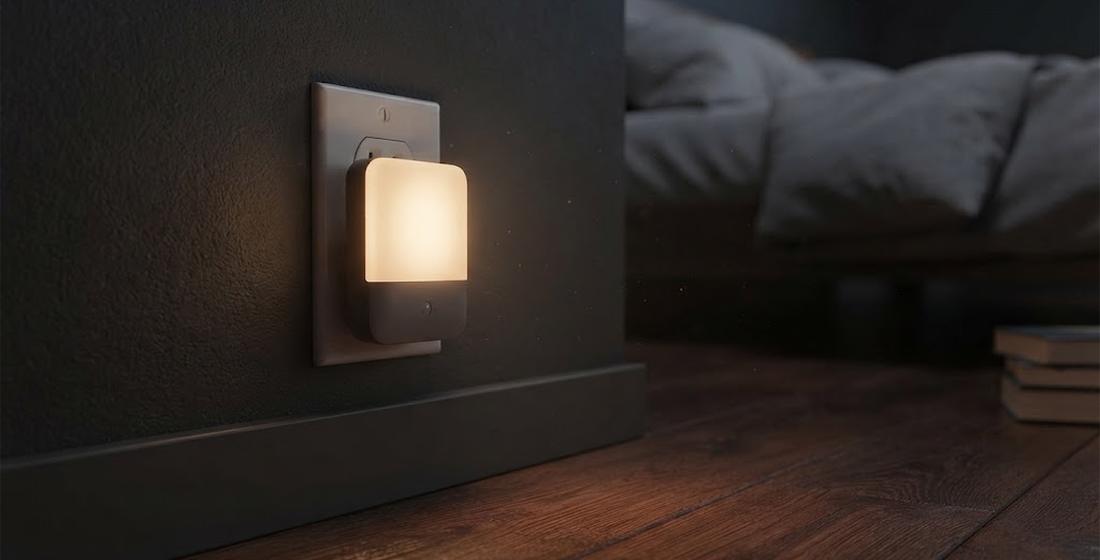
Color temperature matters. Choose warm white (2700K–3000K) — the amber-toned glow visible in the photos on this page. Blue-spectrum light (cool white, daylight) is the most alerting to the brain. Warm white is the least. Almost every package of night lights lists the color temperature. Look for 2700K or 3000K.
Most people adapt within a few nights and stop noticing the glow entirely. What many people report instead is that they sleep better — because the low-level anxiety of lying in a completely dark house not knowing what a sound was is gone. The lights replace uncertainty with information, and information is restful in a way that darkness is not.
📌 For light-sensitive sleepers: Keep the bedroom light in the hallway just outside the door rather than inside the room. The hallway glow provides full security and safety benefit — you can see the moment you open the door — while keeping your sleeping space fully dark. This is often the best arrangement for couples where one person is more sensitive to light than the other.
🛍️ What to Buy — One Simple Answer
You want: a plug-in LED night light with a photocell (dusk-to-dawn) sensor, warm white color, constant low glow all night. That is the entire specification. Here is what to look for.
- Photocell / dusk-to-dawn sensor — turns on automatically when it gets dark, off when daylight returns. You plug it in once and never touch it again.
- Warm white (2700K–3000K) — amber-toned, least disruptive to sleep. Avoid “cool white” or “daylight.”
- 5–20 lumens — bright enough to navigate and assess, not bright enough to feel like the room is lit.
- 0.5–1 watt draw — annual electricity cost in the pennies-per-light range.
- UL or ETL listed — electrical safety certification. Always look for this on the package.
📦 What a complete home kit looks like: Order a 10-pack of warm white photocell LED night lights. Front door area, kitchen, two in the living room, main hallway (two if it's long), both bathrooms near the toilet, bedroom near the door, top of stairs. Total cost: $35–55. Annual electricity for all ten: about $7.50. Installation: plug them in. Done.
Also worth having: Emergency backup night lights
These run their constant low glow from the outlet all night. When the power goes out, a built-in battery keeps them lit for several hours. For seniors they serve triple duty: fall prevention, home security visibility, and emergency outage lighting. They cost $15–30 each.
Shop Emergency Backup Night Lights →Frequently Asked Questions
Do night lights actually help with home security?
Yes — in a specific and practical way. A home with low-glow lights throughout allows you to do a visual assessment of your main living areas from the safety of your bedroom doorway when you hear a sound at night. You can see immediately whether the front room is disturbed, whether the kitchen entry looks wrong, whether the hallway is clear. That information lets you make a decision — go back to sleep, call for help, take action. A dark home provides no information at all and leaves you with no options except waiting and listening.
I already have a burglar alarm. Do I still need night lights?
Yes. An alarm system tells you after a breach has occurred. Night lights give you eyes before and during any situation. They let you see whether something is actually wrong before the alarm sounds, and they let you see what is happening in your own home while you are deciding what to do. The alarm and the lights serve different functions and work best together.
Will a night light that stays on all night disturb my sleep?
For most people, no. LED night lights produce 5–20 lumens, well below the illumination threshold for melatonin suppression. Choosing warm white (2700K–3000K) further reduces any sleep disruption. Most people adapt within a few nights and stop noticing the glow. People who are highly light-sensitive can place the bedroom light in the hallway just outside the door rather than inside the room.
How much will running lights all night add to my electric bill?
Almost nothing measurable. A 1-watt LED night light running all night every night costs approximately $0.74 per year. Ten lights throughout your home cost about $7.40 per year total — roughly 2 cents per night for full home coverage. Leave them in. Leave them on. Do not think about it again.
What is a photocell sensor and why does it matter?
A photocell is a light-sensitive component that detects ambient light levels. When the room gets dark, it activates the night light automatically. When daylight returns, it turns off. You plug the light in once and never touch it again. Look for “dusk-to-dawn” or “photocell sensor” on the package. This is the feature that makes always-on night lights genuinely set-and-forget.
Are there night lights that also work during power outages?
Yes — rechargeable emergency night lights run their normal constant glow from the outlet all night. When the power goes out, a built-in battery keeps them lit for several hours. For seniors these serve three purposes: nighttime fall safety, home security visibility, and emergency lighting during outages. They cost $15–30 each and are worth placing in primary hallway and front-of-house locations.