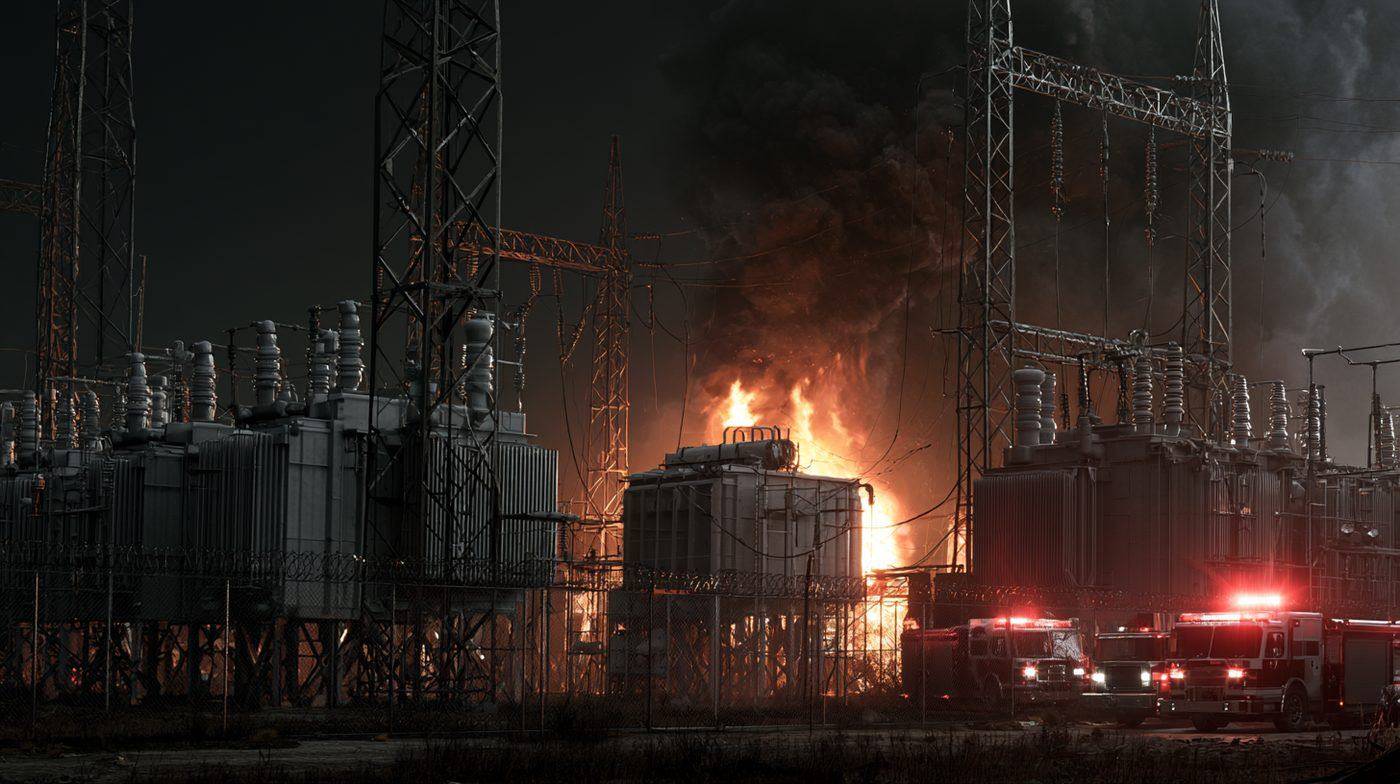
🚨 Moore County, North Carolina — December 3, 2022
Two People Shot Four Substations. 45,000 Customers. Up to Three Days Without Power. In December.
On the night of December 3, 2022, two people drove to four electrical substations in Moore County, North Carolina and fired rifles at the transformer equipment inside. The attack was deliberate, coordinated, and effective. Duke Energy’s grid management system lost 45,000 customers simultaneously.
The temperature that night was in the 30s Fahrenheit. Forecasts called for temperatures in the low 20s over the following nights. Schools closed. A curfew was imposed. Warming shelters opened. Moore County — home to Pinehurst, a retirement community and golf destination, with a disproportionately elderly population — had tens of thousands of seniors sitting in homes that were dropping toward freezing temperatures.
Duke Energy crews worked around the clock. Some customers had power restored within 12 hours. Others waited nearly three days. For a 78-year-old in a home that dropped to 45 degrees Fahrenheit indoors, three days without heat in December is not a hardship. It is a medical emergency in progress. Emergency rooms in the county reported increased admissions for hypothermia-related conditions during the outage. Most patients were elderly.
✅ Neighbors with generators: In Moore County, residents who had whole-home standby generators — common in the area’s retirement communities where many homeowners had specifically purchased them for hurricane preparedness — never lost heat. Never dropped below comfortable temperatures. Never spent a night worrying about their medical equipment. Same attack. Same outage. Completely different experience.
45K
Customers lost power in Moore County, NC after substation shootings
$15M
Damage from the 2013 Metcalf, CA sniper attack on a substation
27
Days to fully repair the Metcalf substation, with maximum resources deployed
9
Substations FERC says would cause a nationwide blackout if destroyed simultaneously
What Is an Electrical Substation and Why Does It Matter?
An electrical substation is the facility where high-voltage transmission power — the kind that travels hundreds of miles on tall steel towers — is stepped down to lower voltages suitable for distribution to homes and businesses. A typical distribution substation serves 10,000 to 50,000 customers. A transmission substation may serve hundreds of thousands.
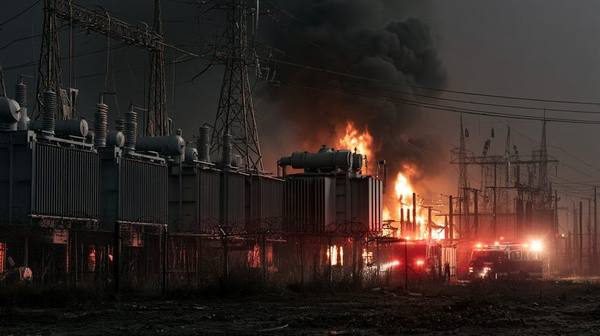 Each substation contains large, custom-built transformers, switchgear, protective relays, and control equipment. This equipment is exposed, ground-level, and in most cases protected only by chain-link fencing. If the transformer inside a substation fails, is destroyed, or is damaged to the point where it cannot safely operate, every customer served by that substation loses power until the transformer is repaired or replaced.
Small transformer failures can be repaired in hours using spare equipment from utility inventory. Large transformer failures can take weeks to months because the units are custom-built, heavy, and must be sourced from a limited number of manufacturers. In the worst cases — where the substation’s main power transformer is destroyed — replacement can take 12 to 18 months.
Metcalf 2013: The Attack That Changed How the Government Thinks About Grid Security
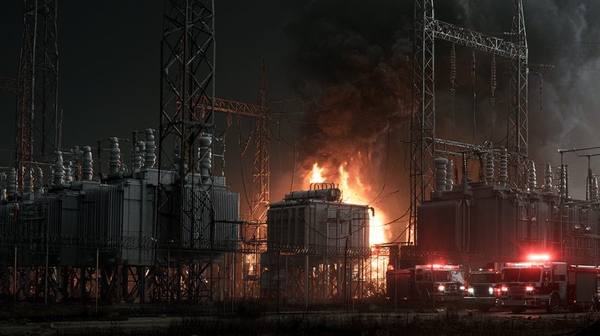 On April 16, 2013, snipers disabled 17 transformers at Pacific Gas and Electric’s Metcalf transmission substation in California by firing high-powered rifles at their cooling systems. The attack lasted 19 minutes. The attackers escaped before law enforcement arrived. No arrests have been made.
The attack caused $15 million in damage and took 27 days to fully repair — with PG&E mobilizing every available resource and working around the clock. The Federal Energy Regulatory Commission (FERC) subsequently issued a report stating that a coordinated attack on just nine of the most critical US substations could result in a nationwide blackout lasting 18 months.
That report was not theoretical. It was based on grid modeling using real infrastructure data. The nine substations identified were chosen because destroying them simultaneously would prevent power from being routed around the damage — the normal recovery mechanism that limits single-point failures. Eighteen months. For a senior on oxygen or insulin, that is not survivable without independent backup power.
Moore County 2022: Proving It Can Happen Anywhere
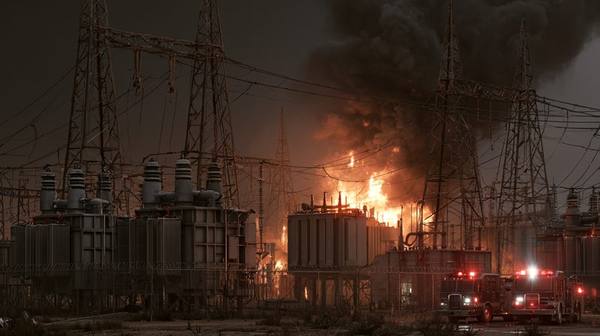 The Moore County attack was not sophisticated. It required two people, two rifles, four locations, and less than a night. What it demonstrated is that substation attacks are not limited to California or to large urban utilities with high-profile infrastructure. A rural North Carolina county with modest security across its distribution substations was equally vulnerable.
Since Moore County, similar attacks have been reported in Washington state, Oregon, Nevada, and Texas. The FBI has warned that copycat and coordinated attacks on electrical infrastructure represent an increasing threat. FERC has moved to strengthen physical security requirements for the most critical substations — but the timeline for implementation extends years into the future, and distribution substations serving individual neighborhoods largely remain outside the scope of federal requirements.
The 50–70 Math: You Cannot Protect the Substation. You Can Protect Your Home.
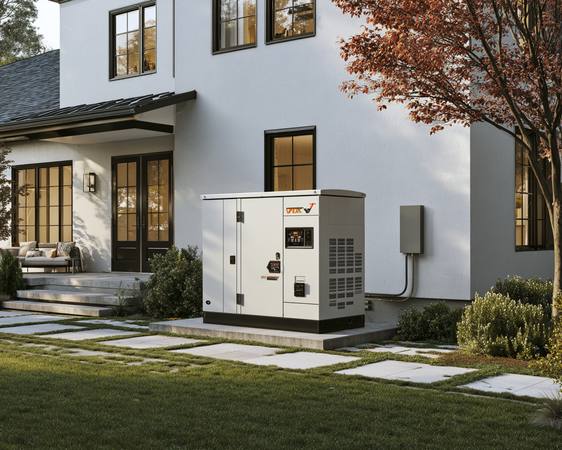 You have no control over whether the substation serving your neighborhood is attacked, flooded, or catches fire. You have no control over when it happens, how long it takes to repair, or where your address falls in the utility’s restoration priority queue. What you can control is whether your home depends on that substation to keep you safe.
A whole-home standby generator is a private electrical system that operates independently of the utility grid. When the substation goes down — for any reason — your generator starts automatically, your home stays powered, and the cause of the outage becomes irrelevant to your daily life. You may watch the repair crews working on the substation from your front porch. Your neighbors may be in warming shelters. You will be home, warm, with working medical equipment and cold food.
At 55, that generator is a reasonable investment in a comfortable retirement. At 75, without it, you are among the elderly residents being transported to warming shelters in Moore County on a December night. The investment window closes faster than most people realize.
The Substation Serving Your Neighborhood Is One Event Away from Failure.
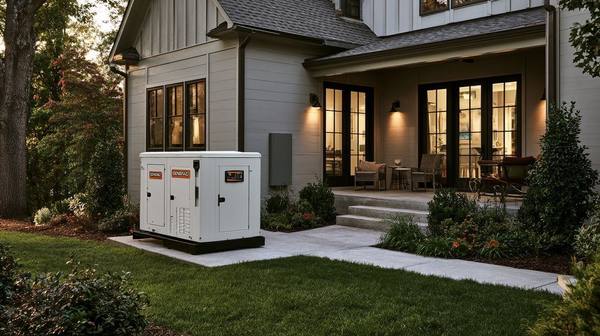 You cannot know when. You cannot prevent it. But you can be the household that never notices when it happens. Use our generator size calculator to find the right generator for your home — sized for your specific appliances, medical equipment, and budget — before the next substation event puts you in a shelter.
⚡ Calculate My Generator Size →
See All 15 Reasons Power Goes Out
Frequently Asked Questions
Are substation attacks becoming more common?
Yes. FBI and DHS data show an increase in physical attacks on electrical infrastructure since 2020. The Moore County attack in December 2022 was followed by similar incidents in Washington, Oregon, and Nevada. Law enforcement officials describe the threat as increasing and describe existing security at many substations as inadequate.
What other things cause substation failures besides attacks?
Fire is the most common cause of serious substation damage — often from equipment failures within the substation itself. Flooding during hurricanes and major rain events is also a leading cause. Equipment aging and failure without any external event accounts for a significant share of substation outages. Vandalism short of deliberate attack also occurs.
Will FEMA or the government help me during a long substation outage?
FEMA can activate disaster assistance after a presidential disaster declaration, which requires a lengthy process. Local emergency management opens warming and cooling shelters. But in the immediate days following a substation failure, official assistance is limited and overwhelmed. Neighbors with generators help other neighbors. People without any backup power wait. The sequence is consistent across documented events.
📚 Primary Sources & Official Data
Page last reviewed: June 2026 | Author: Franklyn Galusha

Written & Researched By
Founder, Franklyns Bay LLC — Florida resident since 1984 — 25+ years SEO & web publishing — Nature Coast homeowner & 40+ hurricane seasons lived through.
Full bio →