🚨 August 14, 2003 — A Software Bug in Ohio Blacked Out 55 Million People
The Operators Couldn’t See the Problem. By the Time They Could, 55 Million People Were in the Dark.
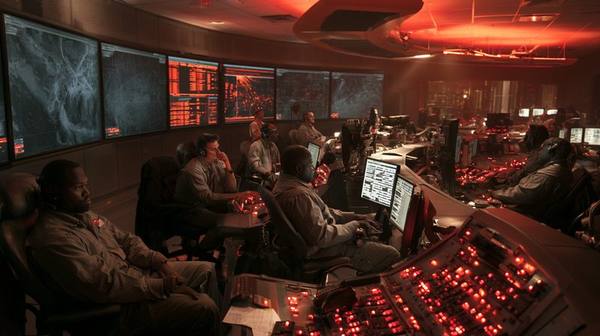
On August 14, 2003, at 2:02 PM, a software bug in FirstEnergy’s alarm system in Ohio caused the system to stop displaying alerts to grid operators. The operators did not know the alarm system had failed. They believed their grid was operating normally. It was not.
Over the next hour and a half, three high-voltage power lines in Ohio sagged in high summer heat, made contact with trees that had not been cleared as required, and faulted. Each fault was supposed to trigger an alarm. None did. The failures caused power to reroute through adjacent lines, overloading them. Those lines faulted and tripped. The cascade accelerated. At 4:10 PM, the cascade went regional.
In nine minutes, the northeastern United States and parts of Canada went dark. 55 million people. Eight US states. Two Canadian provinces. Some customers were without power for up to four days. New York City hospitals operated on generators. Subway systems stopped. Traffic lights went dark. In the August heat, elderly residents across the Northeast were without air conditioning for days. Emergency rooms reported elevated deaths from heat stress among elderly patients who had been without power for 24 to 48 hours before being found.
⚠️ The speed of the 2003 cascade: From the first undetected fault to a 55-million-person blackout: approximately 90 minutes. From the start of the visible cascade to the blackout: nine minutes. There is no time to buy a generator after a control system failure begins. There is barely time to find a flashlight. The preparation must already be in place.
What Is SCADA and Why Does It Control Your Power?
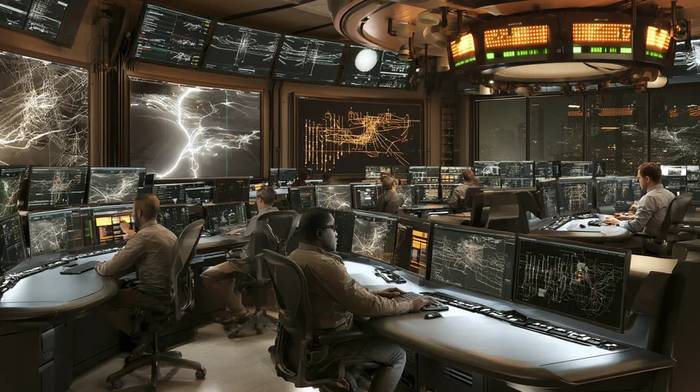
SCADA (Supervisory Control and Data Acquisition) is the software system that utility operators use to monitor and control electrical infrastructure. From a central control room, SCADA allows operators to see the real-time status of every breaker, switch, transformer, and generating unit in their service area — and to control those devices remotely with software commands.
SCADA systems are the nervous system of the modern electrical grid. Without them, operators are flying blind across a network of thousands of pieces of equipment spread across thousands of square miles. With them, a small team of operators in one building can manage the entire grid of a major utility.
The vulnerability is obvious: if the SCADA system provides incorrect information — as the FirstEnergy alarm system did in 2003 — operators make decisions based on false data. If the SCADA system is compromised by a cyberattack, operators may lose visibility and control simultaneously. If the communication network between the SCADA center and field equipment fails, remote control becomes impossible. Any of these failures can prevent the human response that would otherwise stop a cascade before it goes regional.
GPS Timing: The Hidden Dependency Most People Do Not Know About

Modern power grid control systems depend on GPS satellite timing signals to synchronize measurements across the grid. Phasor measurement units (PMUs) — devices that measure electrical conditions across the grid in real time — use GPS timing to ensure that measurements taken at different locations can be compared and analyzed synchronously. This synchronization is essential for the real-time grid management that prevents cascades.
GPS timing disruption — through solar weather interference, GPS jamming (documented in conflict zones and increasingly in civilian areas), or GPS spoofing — can cause measurement synchronization errors that degrade grid operators’ ability to manage the system in real time. This is a vulnerability that DHS has documented and that the power industry is working to address, but the dependency on GPS timing is deeply embedded in modern grid control systems and cannot be quickly replaced.
The 50–70 Math: Nine Minutes Is Not Enough Time to Prepare
The 2003 Northeast blackout went from a manageable Ohio problem to a 55-million-person blackout in nine minutes. You cannot drive to a hardware store and buy a generator in nine minutes. You cannot charge a battery station in nine minutes. You cannot call a generator installer in nine minutes and have them arrive before the lights go out.
Control system failures are among the most unpredictable categories of outage — they can happen on any day, in any weather, in any season, affecting regions far larger than any single storm. The only effective response is to have backup power already in place before any specific failure occurs.
The 55-year-old who installed a generator in April — not because they knew about SCADA systems or grid cascades, but because they understood that power goes out 15 ways and they wanted to be ready for all of them — is the same person who watches their neighbors scrambling in the dark when a software bug in Ohio changes everything on a Tuesday afternoon in August.