
🥓 What Bacon Grease and Lard Actually Are
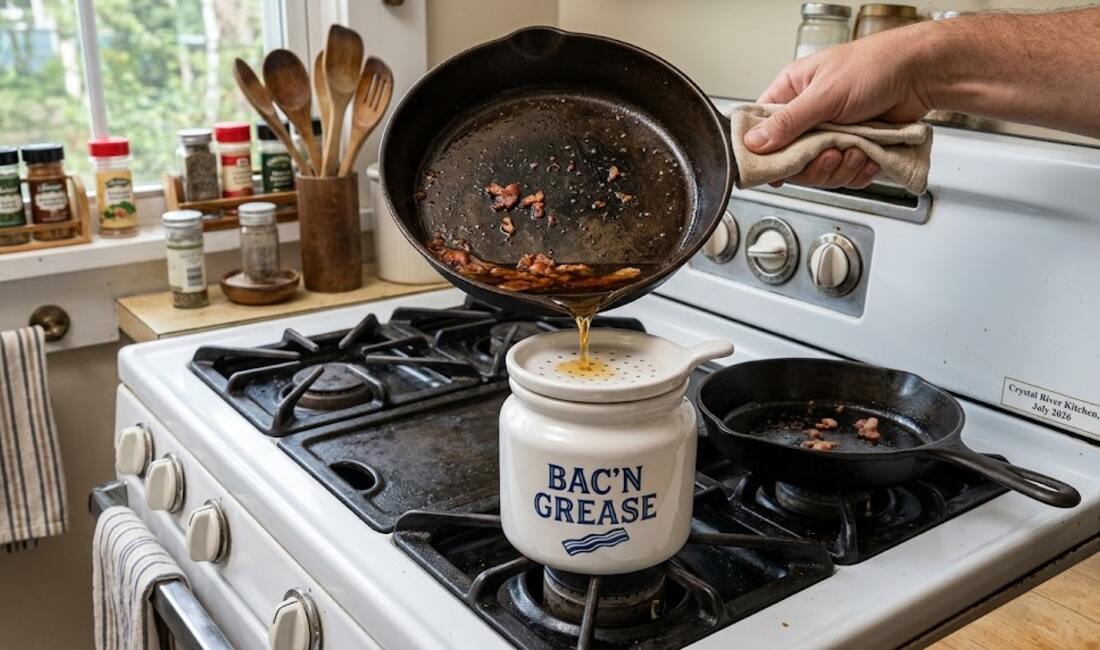
They are not the same thing, though they come from the same animal and are often used interchangeably in old recipes. Understanding the difference matters.
Bacon Grease
Bacon grease is the rendered fat left in the pan after you fry bacon. It contains the fat from the pork belly, plus the salt, smoke flavoring, and sometimes sugar used to cure the bacon. It has a strong, distinctly smoky, salty flavor that carries into anything you cook with it. This is what your grandmother kept in the can on the stove. It is not a shelf-stable product in a commercial sense — it contains small amounts of protein and moisture from the bacon itself, which is why it should be strained and used within a reasonable time.
Lard
Lard is rendered pork fat — specifically fat that has been melted down, purified, and strained until it is nearly pure fat with a clean, mild flavor. The best lard for baking is leaf lard, rendered from the fat surrounding the pig’s kidneys. It is the most neutral in flavor, the whitest in color, and produces the flakiest pastry of any fat available.
Regular lard rendered from back fat or pork shoulder has a slightly more pronounced pork flavor and is excellent for frying. What you buy in a tub at most grocery stores today is a heavily processed, partially hydrogenated commercial lard — which is a different product entirely from what your grandmother rendered herself or bought from a butcher.
📌 The key distinction: Naturally rendered lard contains zero trans fats. The commercial lard sold in most grocery stores has been partially hydrogenated to extend shelf life and may contain trans fats. When people in the health community criticize lard, they are often criticizing the commercial version, not the real thing. If you want the lard your grandmother used, look for a butcher who renders it fresh, or render your own from pork fat.
Fat Composition Comparison
| Fat | Saturated Fat | Monounsaturated | Polyunsaturated | Trans Fat |
|---|---|---|---|---|
| Natural Lard | ~40% | ~47% | ~13% | None |
| Butter | ~54% | ~30% | ~4% | Trace |
| Original Vegetable Shortening (pre-2007) | ~25% | ~38% | ~37% | Significant (pre-2007) |
| Modern Vegetable Shortening | ~25% | ~44% | ~26% | Trace (label says 0g)* |
| Olive Oil | ~14% | ~73% | ~11% | None |
| Bacon Grease | ~39% | ~45% | ~11% | None |
*FDA rules allow products containing less than 0.5g trans fat per serving to list 0g on the label. Modern Crisco still lists partially hydrogenated oil as an ingredient. Verify on Crisco’s own product page →
📚 Sources & Further Reading
The factual claims on this page are drawn from the following published sources. We encourage readers to follow the links and read the primary sources directly.
- FDA: Final Determination Regarding Partially Hydrogenated Oils (2015) — the ruling that removed trans fats from the U.S. food supply.
- USDA NESR: Food Sources of Saturated Fat and Cardiovascular Disease (November 2024) — the 2025 Dietary Guidelines Advisory Committee systematic review cited in the science section.
- USDA FoodData Central: Lard, nutritional profile — source for fat composition percentages.
- BMJ (2016): Saturated fat does not clog the arteries — peer-reviewed discussion of the evolving saturated fat science and limitations of the original Ancel Keys research.
- NPR: A Short History of Crisco (2012) — sourced account of Crisco’s introduction and early marketing.
- Crisco product page (current) — current ingredient list confirming partially hydrogenated oil remains listed as an ingredient.
💬 The Women Who Kept the Crock
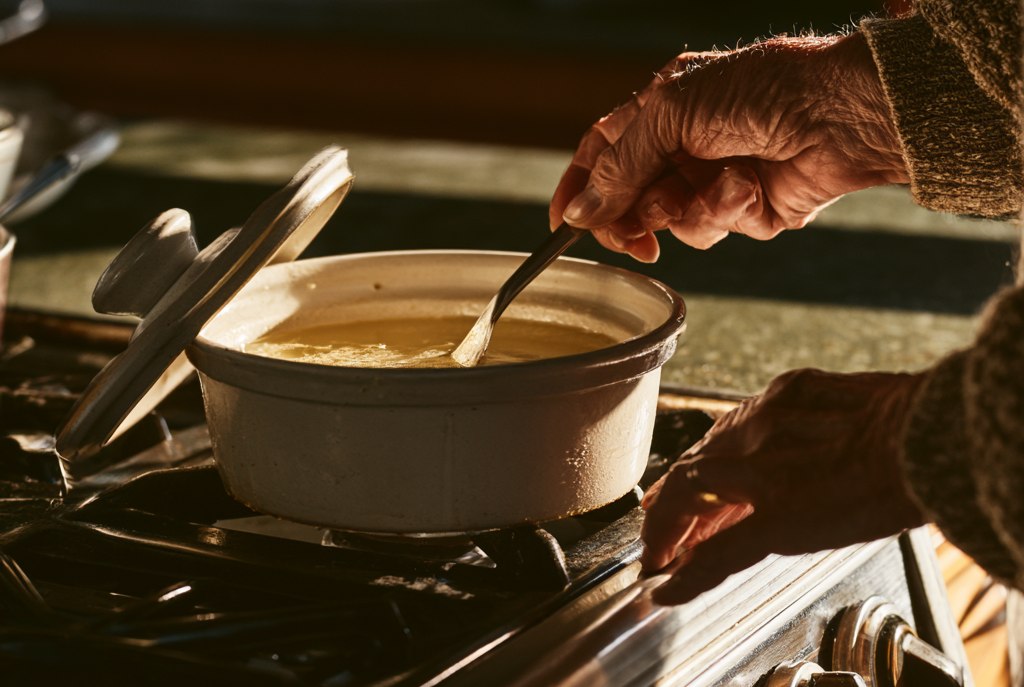
Before the marketing campaigns, before commercial vegetable shortening, before anyone had decided that animal fat was the enemy — there were women who cooked every meal of their lives with bacon grease and lard and fed their families well for decades. These are some of their stories.
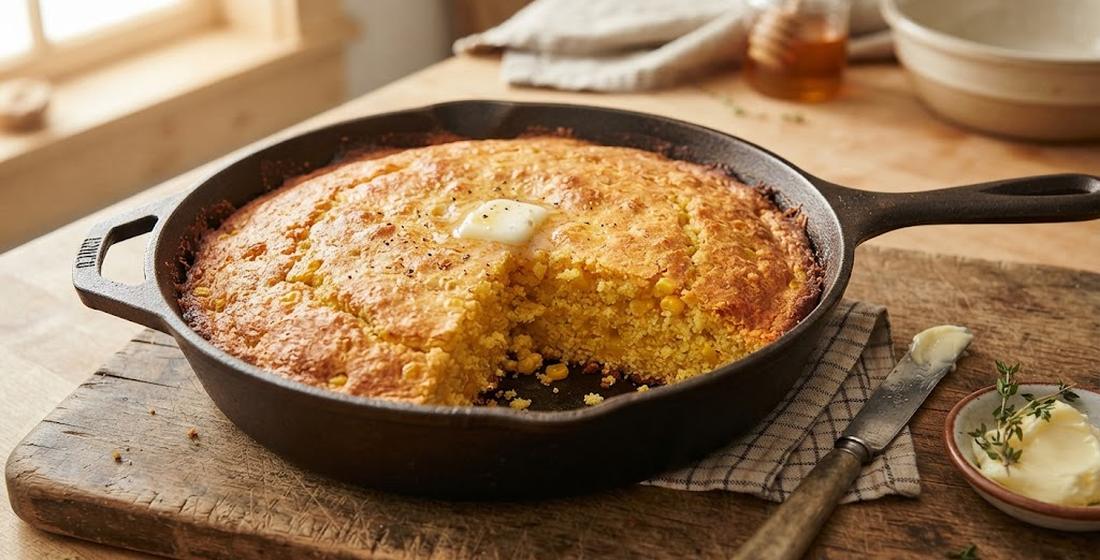
“My mother kept a white ceramic crock on the back left burner of her stove her entire adult life. It never moved. When she finished frying bacon in the morning she tipped the pan and the grease went into the crock through a little strainer she kept propped over the top. That was the first thing she did after breakfast and the last thing she did before leaving the kitchen.
That grease was in everything she cooked. The cornbread. The green beans. The eggs. The gravy. She used it to wipe down her cast iron skillet after every wash. She used it to grease the baking pan before rolls. When she made biscuits on Sunday mornings she would take a spoonful and work it through the flour with her fingers, the same way her mother had showed her.
My mother cooked her own breakfast until she was eighty-seven. When she passed, the ceramic crock was still on the back burner. I brought it home. I still have it. I use it the same way she did, and her mother before her. People ask me why my cornbread tastes different from anyone else’s. The answer is in the crock.”
“My grandmother made biscuits every single morning of her life from the time she was married at seventeen until she was ninety-three years old. She made them with lard she kept in a coffee can in the cool corner of the pantry. I watched her make them a thousand times. She never measured anything. She knew the dough by feel.
She would put the flour in the bowl, make a well in the center, drop in a large spoonful of lard, pour in the buttermilk, and work it with her hands for exactly as long as it needed — which she said was about as long as it takes to say the Lord’s Prayer once, slowly. She cut them with the top of an old baking powder tin. She baked them in a cast iron skillet in a hot oven.
I have tried to make those biscuits my entire adult life. I used vegetable shortening for twenty years because someone told me it was the same. It is not the same. It has never been the same. When I finally started using real leaf lard I got closer. Not identical — her hands knew something my hands don’t know yet. But closer. The difference between a lard biscuit and a shortening biscuit is the difference between a photograph of a mountain and the mountain itself.”
“In my family, throwing away bacon grease was the kind of thing that would have gotten you looked at. You simply did not do it. Fat was not something you wasted. My grandmother grew up in the Depression and she would have found the idea of pouring bacon grease down the drain genuinely shocking — the same way she found it shocking when she learned people were throwing away chicken bones instead of making stock.
We kept it in a tin can with a lid on the back of the stove. When the can got too full we rendered it a little longer on the stove to drive off any moisture, then poured the clear gold fat into a clean jar and kept it in the icebox. We called it grease. Not bacon grease specifically — just grease, the way you call a road a road without explaining what kind.
I am seventy-seven years old and I still do this. My daughter asked me once if I was worried about the fat. I told her I was more worried about what was in the things people replaced it with. She looked into it. She has her own crock now.”
“My mother-in-law was from a long line of Tennessee farm women who kept lard in a five-gallon bucket in the cellar. They rendered their own from the hogs they raised. After the fall butchering, there would be a rendering day where all the fat got cooked down in a big cast iron kettle over an outdoor fire, stirred constantly, strained through cloth into crocks and tins. What came out was pure white and sweet-smelling and it would last them through the year.
She taught me to make pie crust with it. The first time I made a pie crust with real lard instead of vegetable shortening, I understood something I had not understood before about why certain things taste the way they taste in old recipes. The crust was different. Flakier. More tender. It shattered when you cut it instead of bending. My husband tasted it and said, ‘That tastes like my grandmother’s pie.’ He hadn’t tasted his grandmother’s pie in thirty-five years.
Some things were done a certain way for a very long time because that way was right. The fact that we forgot it for a few decades doesn’t mean it stopped being right.”
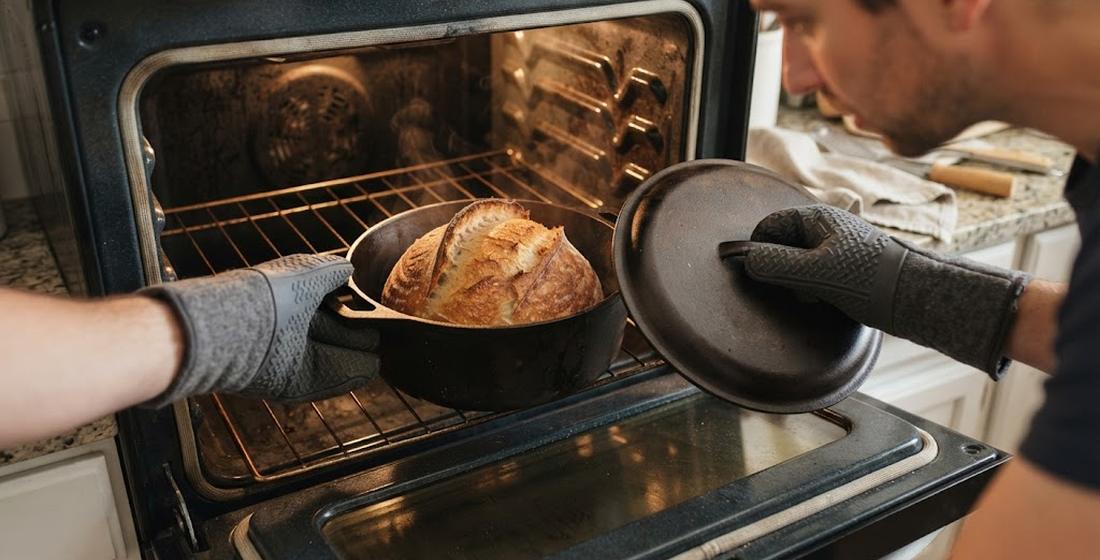
“My grandmother was a country cook in the old sense — she cooked three meals a day for a household of twelve and she did it with what she had, which included a generous amount of lard and bacon grease. She did not think of these things as fats in the nutritional sense. They were just part of cooking, the way water is part of cooking. You used them because they made food better.
She made her own lard every year after they butchered. She would cut the leaf fat into small pieces, render it in a cast iron pot over low heat, skim the cracklings off the top (which we ate immediately with a little salt), and pour the clear liquid fat into clay crocks that went into the cool cellar. Those crocks represented months of cooking.
When I was in my forties and fifties I cooked with commercial vegetable shortening and oil because that is what everyone did. In my sixties I started researching what had actually happened to the food chain and I found the story of trans fats. I went back to lard and bacon grease. My food got noticeably better. My grandmother, who lived to ninety-three, could have told me that.”
“I grew up in a household where everything was cooked in lard or bacon grease and nobody talked about it because there was nothing to talk about. It was simply how you cooked. My mother’s cornbread was famous in our county. People asked for it at every gathering. She won the church social competition for thirty years running. The recipe had five ingredients. One of them was bacon grease from the crock on the stove.
When I got married in 1982 I switched to commercial vegetable shortening because my husband’s family cooked with it and because all the magazines said it was healthier. My cornbread was never as good as my mother’s. I made it for twenty years and it was always a little off in a way I could not identify. Good enough. But not hers.
About ten years ago I started using bacon grease again. The first pan of cornbread I made with it, I stood at the stove and my eyes filled up. It tasted like my mother’s kitchen. It tasted like Sunday dinners when I was nine years old. It tasted like something I had lost without knowing I had lost it. All of that was in the crock the whole time. I had just stopped using it.”
📜 How Commercial Vegetable Shortening Convinced America to Throw Away the Crock
This is one of the most consequential marketing campaigns in American food history, and most people have never heard the story told plainly.
In 1911, a major soap manufacturer introduced a new product — a solid shortening made from cottonseed oil that had been chemically hydrogenated to make it solid at room temperature. It was cheaper to produce than lard, had a longer shelf life, and — critically — the manufacturer needed to find a use for the cottonseed oil that was a byproduct of their soap manufacturing. [NPR: A Short History of Crisco]
The marketing strategy was aggressive and clever. The manufacturer hired doctors and rabbis to provide testimonials. They positioned the new shortening as cleaner, more modern, and more digestible than lard. They distributed free cookbooks rewriting traditional recipes to use it instead of lard. The word “vegetable” in “vegetable shortening” did a lot of work — everyone knows vegetables are good for you. The implication was clear even if it was never stated directly: The shortening was healthy. Lard was not.
💡 What they didn’t know in 1911: The hydrogenation process that made cottonseed oil solid at room temperature created trans fatty acids — a form of fat that, as research beginning in the 1990s established, raises LDL cholesterol, lowers HDL cholesterol, promotes inflammation, and is associated with significantly increased cardiovascular risk. The product that was marketed as healthier than lard turned out to contain fats that are now considered more harmful than what lard naturally contains.
By the 1950s and 60s, the demonization of saturated fat from animal sources was complete. The Seven Countries Study, published in 1970 by Ancel Keys, drew a correlation between saturated fat consumption and heart disease that became gospel for decades. What was less publicized at the time: Keys cherry-picked the countries in his study, excluding data from nations that did not fit his hypothesis — a criticism documented in peer-reviewed literature and widely discussed in nutrition science.
[BMJ: The saturated fat debate] This does not mean saturated fat is harmless — the current medical and scientific consensus still recommends limiting saturated fat intake, and that guidance is based on decades of subsequent research beyond Keys alone. It means the original story was built on incomplete evidence, and the replacement that followed — partially hydrogenated vegetable oil — turned out to carry its own serious risks.
By the 1970s, your grandmother’s bacon grease crock had been replaced by commercial vegetable shortening in millions of American kitchens. The replacement was sold as a health improvement. The trans fat crisis of the 1990s and 2000s — which led to the FDA banning partially hydrogenated oils in 2015 — revealed the cost of that trade. [FDA: Final Determination on Partially Hydrogenated Oils]
🤔 The honest summary: Neither lard nor commercial vegetable shortening is a health food in large quantities. But the century-long campaign convincing Americans that animal fat was uniquely dangerous was driven as much by commercial interest as by completed science. The trans fat that replaced it turned out to be measurably worse. Your grandmother’s crock was not the villain it was made out to be.
🧪 What the Science Actually Says Today
The nutrition science around saturated fat has become significantly more nuanced since the 1970s. Here is what the current evidence shows — stated plainly, without either demonizing or glorifying animal fats.
Saturated Fat Is Not All the Same
Saturated fats are a family of different compounds, not a single substance. Research has established that different saturated fatty acids affect the body differently. Stearic acid — which comprises a significant portion of lard and bacon grease — has been shown to have a neutral effect on LDL cholesterol, unlike some other saturated fats. The chain length of saturated fatty acids matters in ways that earlier blanket warnings about all saturated fat did not account for.
Lard Contains Meaningful Amounts of Monounsaturated Fat
Natural lard is approximately 47% monounsaturated fat* — the same type of fat found in olive oil, which has been consistently associated with cardiovascular benefits. This is a higher proportion of monounsaturated fat than butter. Lard contains about 40% saturated fat*, compared to butter’s 54%. The nutritional profile of lard is closer to olive oil than most people realize, though the comparison has limits. [USDA FoodData Central: Lard]
* Fat-composition percentages reflect the USDA FoodData Central nutrient database. Dietary fat affects individuals differently. We encourage you to check these sources yourself. This is general information, not medical advice — ask your own doctor how it applies to you.
The Trans Fat Reversal
In the 1990s, scientific studies found that commercial vegetable shortenings contain trans fats that contribute to unhealthy cholesterol levels and clogged arteries. This was the fat that replaced lard in millions of American kitchens. Amid rising skepticism toward ultra-processed foods, many home cooks are re-evaluating lard — not as outdated, but as a minimally processed, traditional fat with functional superiority in certain dishes.
What the 2025 Dietary Guidelines Research Says
The 2025 Dietary Guidelines Advisory Committee conducted a systematic review of food sources of saturated fat and cardiovascular disease risk, reviewing evidence from January 1990 through January 2024. The research continues to suggest that limiting total saturated fat intake is prudent for most people, while also acknowledging that the source and food context of saturated fat matters — animal fat in whole foods does not carry the same risk profile as industrially processed trans fats. [USDA NESR: Food Sources of Saturated Fat and CVD, 2024]
⚠️ What this does NOT mean: None of this research means bacon grease and lard are healthy in unlimited quantities, or that people with existing cardiovascular disease should ignore their doctors’ advice. Saturated fat in large amounts does affect LDL cholesterol for many people. The point is that the blanket condemnation of all animal fat, while the processed vegetable fat that replaced it turned out to contain trans fats, was not a straightforward health victory. Moderation and context matter. Your doctor’s guidance for your specific situation matters more than any general statement on this page.
✅ Who Can Use Bacon Grease and Lard
For most generally healthy adults who are not managing specific cardiovascular conditions, using bacon grease and lard in modest amounts — the way they were traditionally used — is not the health emergency it was described as for forty years.
Traditional Use Was Modest
Here is something important that gets lost in the debate: your grandmother did not eat bacon grease by the spoonful. She used a tablespoon or two to grease the skillet, season the cast iron, start the beans, or make a pan of cornbread. These are small amounts of fat spread across an entire dish. The quantity matters as much as the type.
- Generally healthy adults who are not managing heart disease, high cholesterol, or related conditions can use bacon grease and naturally rendered lard in the amounts traditional recipes call for without significant concern.
- People managing weight should be aware that both are calorie-dense fats — about 120 calories per tablespoon — and moderate accordingly. But this is true of olive oil and every other cooking fat as well.
- People who cook with cast iron will find that bacon grease is one of the best substances for building and maintaining seasoning. It is also what generations of cast iron users have always used for exactly this purpose.
- People cooking for flavor will find that a small amount of bacon grease in cornbread, green beans, or collards produces a depth of flavor that no vegetable oil replicates. These are reasonable pleasures, not reckless choices.
⚠️ Who Should Be Careful — Or Ask Their Doctor First
This is not a page that tells people to ignore medical advice. These are real considerations for real situations.
- People with diagnosed cardiovascular disease or heart failure should follow their cardiologist’s dietary guidance, which typically includes limiting saturated fat. This is not the moment to re-evaluate ancestral cooking practices without professional input.
- People with familial hypercholesterolemia (a genetic condition causing very high LDL cholesterol) are particularly sensitive to dietary saturated fat and should follow their doctor’s specific recommendations.
- People on cholesterol-lowering medications (statins) are managing their lipid levels with medication, and adding significant saturated fat to the diet works against that management. Ask your doctor what level of dietary saturated fat is appropriate for your situation.
- People who have had a recent cardiac event (heart attack, stroke, bypass surgery) are in a different category than generally healthy adults and should follow their cardiologist’s post-event dietary protocol, which is typically strict about saturated fat.
- People with uncontrolled Type 2 diabetes should discuss dietary fat with their care team, as the relationship between dietary fat, blood sugar, and cardiovascular risk is complex in that context.
💬 The honest framing: The question is not “is bacon grease good or bad?” The question is “what is your specific health situation, and what does your doctor say about dietary fat?” For a generally healthy 65-year-old with normal cholesterol and no cardiovascular history, a tablespoon of bacon grease in the cornbread is not a medical event. For a 65-year-old managing heart failure, it is a different conversation. Know which conversation you are in.
🍲 How to Save, Store, and Use Bacon Grease
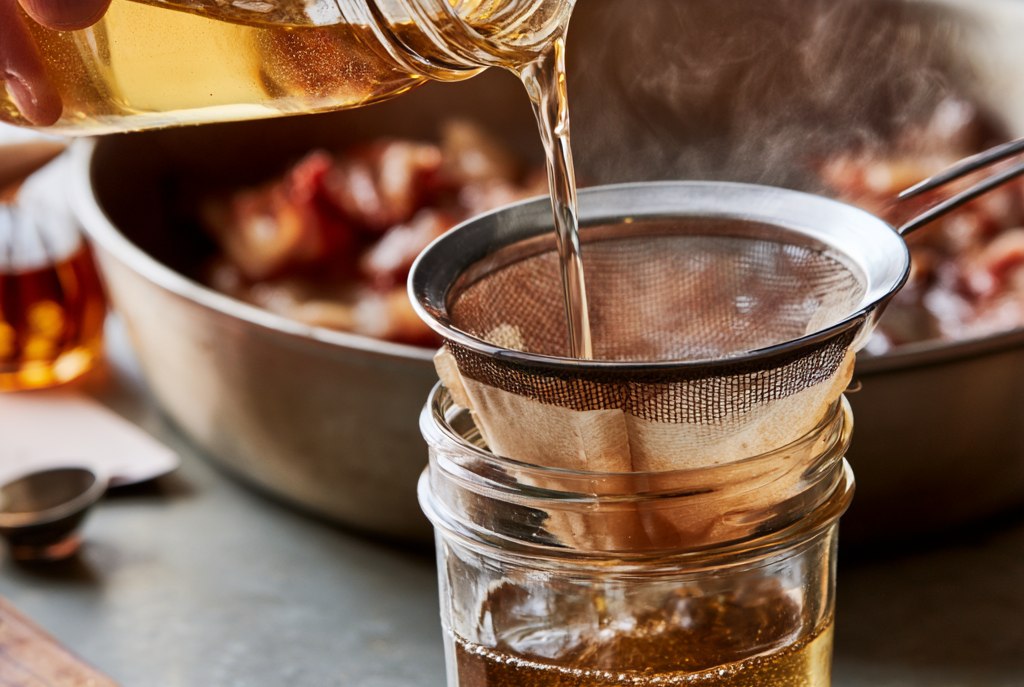
Your grandmother knew exactly how to do this. Most people under fifty have never been taught. Here is everything you need to know.
How to Save It
- After frying bacon, let the grease cool in the pan for 5–10 minutes until it is warm but not scorching.
- Strain it through a fine mesh strainer or cheesecloth into a heat-safe container — a ceramic crock, a glass jar, or a metal can with a lid. Straining removes the small bacon bits that can spoil faster than the fat itself.
- Let it cool completely before sealing. Trapping steam inside the container introduces moisture, which is the enemy of shelf life.
- Label it with the date. Fresh straining yields the cleanest grease. If you add new bacon grease to an old jar, the older grease sets the clock for the whole batch.
How to Store It
- On the counter: Well-strained bacon grease in a covered container keeps at room temperature for about 2–4 weeks. This is exactly what your grandmother did, and it worked because rendered fat has very low moisture content and the salt acts as a mild preservative.
- In the refrigerator: Keeps for 3–6 months. Becomes solid and white — just like lard — and scoops easily with a spoon. This is the safest modern approach.
- In the freezer: Keeps essentially indefinitely. Freeze in small portions — an ice cube tray works perfectly. Pop out a cube when you need one.
What to Do With It
- Season cast iron: Wipe a thin coat of bacon grease over your cast iron skillet after every wash. It is what the pan was seasoned with for a hundred years and it works better than most modern alternatives.
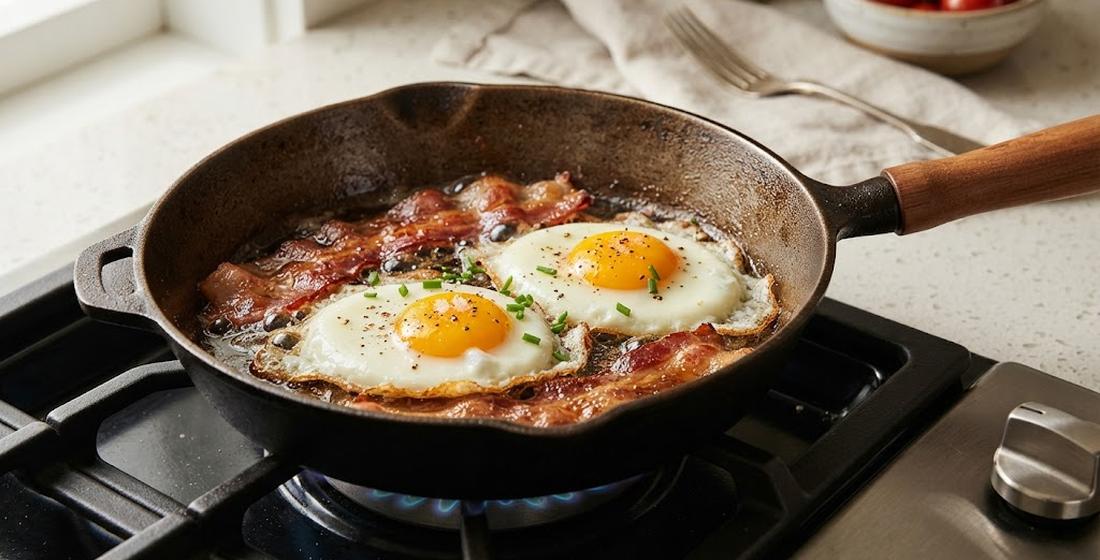
- Fry eggs: A small amount in a well-seasoned cast iron skillet produces eggs with a lacy, crispy edge and a flavor that butter and oil cannot replicate.
- Make cornbread: Melt a tablespoon in the cast iron skillet before adding the batter. The sizzle when the batter hits the hot grease creates the crust on the bottom. This is not optional. This is cornbread.
- Season vegetables: A tablespoon of bacon grease in green beans, collard greens, or black-eyed peas does more for flavor than any combination of herbs and spices.
- Start a pot of beans: Cook a small amount of diced onion in bacon grease before adding the beans and water. This is the foundation of virtually every Southern bean recipe ever written.
- Roast potatoes: Toss cubed potatoes in bacon grease before roasting. The result is a crust that vegetable oil produces but cannot match for flavor.
- Gravy: Bacon grease as the fat base for pan gravy — deglaze the pan with flour stirred into the hot grease, then add liquid — is one of the foundational techniques of American home cooking.
🧈 The Biscuit Truth — Why Lard Makes the Best Biscuits Ever Made
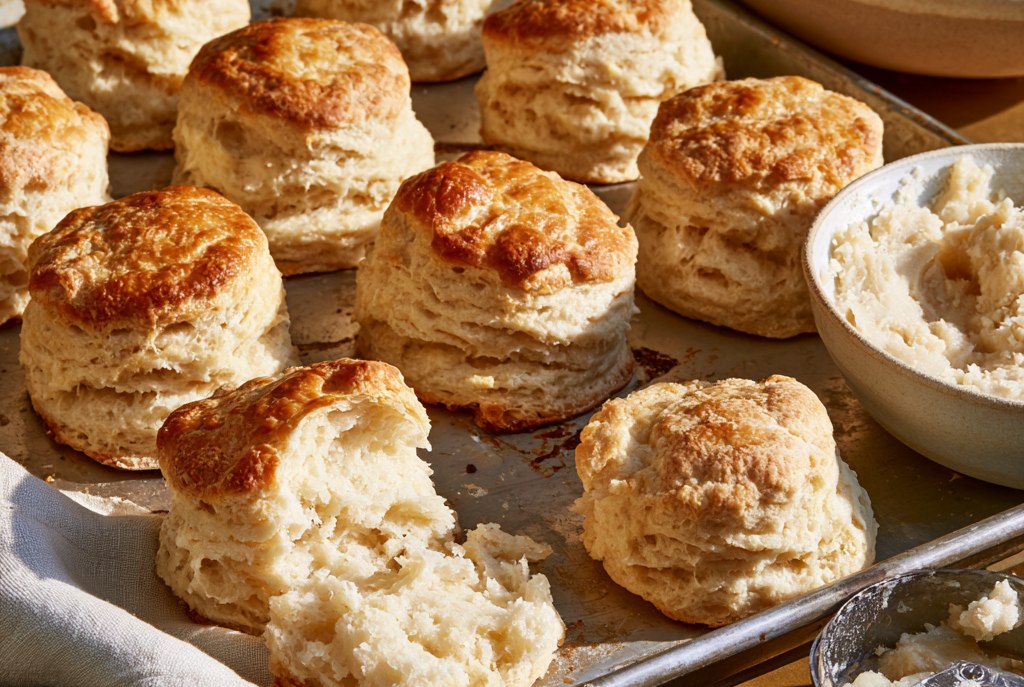
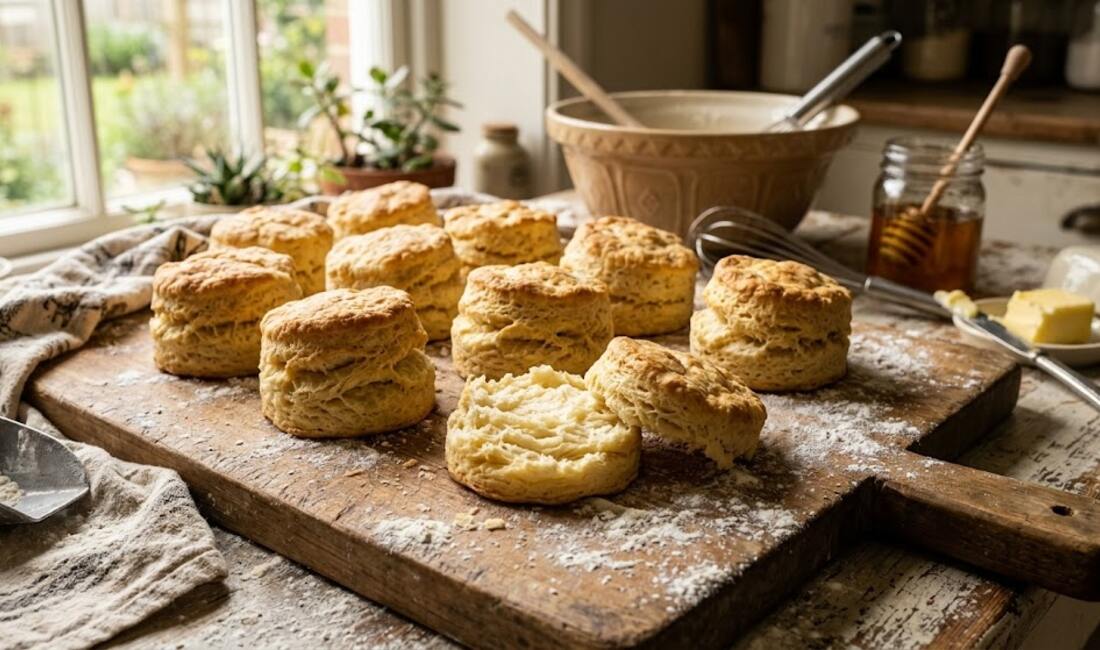
This is not a matter of nostalgia. It is a matter of food science. Lard makes better biscuits than any other fat, and there are specific, explainable reasons why.
The Science of Flaky Biscuits
A flaky biscuit is the result of fat coating flour particles and preventing gluten from forming long strands. When the biscuit hits the oven, water in the dough turns to steam and the layers separate. The quality of the flake depends almost entirely on the behavior of the fat during mixing and baking.
Lard has what bakers call a good plastic range, meaning it stays workable and pliable even at fairly low temperatures. This makes it especially forgiving in biscuit dough. Many pie bakers consider lard the gold standard for flaky crusts because of this flexibility. In biscuits, the same principle applies: lard stays cold longer during cutting and mixing, which means it coats the flour in distinct layers rather than melting into it prematurely. Those layers are what become the flake.
Butter melts at a lower temperature and contains water, which creates steam but also collapses layers. Vegetable shortening stays solid too long in the oven, which gives a shorter, softer crumb rather than distinct flake. Lard hits the sweet spot: it stays cold during mixing and melts at exactly the right moment in the oven.
Why Your Grandmother’s Biscuits Were Better
She used leaf lard, or lard she rendered herself, or lard from a butcher who rendered it fresh. She kept it cold. She worked the dough as little as possible. She baked in a hot oven in a cast iron pan. Every one of these choices was right, and the combination is nearly impossible to improve upon.
When commercial vegetable shortening replaced lard in biscuit recipes starting in the 1950s, the biscuits changed. They became softer, more uniform, more cakey. They were still good. But the shatteringly flaky, layered biscuit that tears into distinct leaves — that required lard, and most people under sixty have never tasted one.
🧈 Leaf lard for biscuits: If you want to make biscuits the way they were made for a hundred years, look for leaf lard from a butcher who renders it fresh. It is white, nearly odorless, and produces a biscuit that tastes like nothing you have bought at a restaurant in the last forty years. Some farmers’ markets sell it. Some specialty grocery stores carry it. You can also render your own from pork leaf fat that any good butcher can order. The result is worth every bit of the effort.
→ Find leaf lard on AmazonFrequently Asked Questions
Is bacon grease bad for you?
It depends on your individual health situation and the amount you use. Bacon grease is high in saturated fat and sodium from the curing process. Current research suggests that saturated fat from whole food animal sources affects cardiovascular risk differently than trans fats from partially hydrogenated oils. Used in small amounts for cooking and flavoring — as it was traditionally used — it is not the catastrophic health risk it was described as for forty years. People with existing cardiovascular disease, high cholesterol, or on specific cardiac medications should discuss dietary fat with their doctor before making changes.
Is lard healthier than commercial vegetable shortening?
Naturally rendered lard contains no trans fats and is approximately 47% monounsaturated fat — similar to olive oil. The leading commercial vegetable shortening, introduced in 1911, was made from partially hydrogenated vegetable oil and contained significant trans fats, which are now considered more harmful to cardiovascular health than the saturated fats in lard. Modern formulations have been reformulated to reduce trans fats, but some still contain partially hydrogenated oil as an ingredient. Lard in its natural form has always been free of trans fats. Neither is a health food in large quantities, but the century-long campaign against lard was based partly on marketing rather than complete science.
How long does bacon grease keep?
Well-strained bacon grease in a covered container keeps at room temperature for 2–4 weeks, in the refrigerator for 3–6 months, and in the freezer virtually indefinitely. The key is straining out all bacon solids before storing, as those bits spoil faster than the fat itself. Always let it cool before sealing the container to prevent moisture condensation inside.
Where do I find real lard for baking?
Most grocery store lard has been partially hydrogenated and is not the same product as naturally rendered lard. For baking, look for leaf lard — rendered from the fat around the kidneys — from a butcher who renders it fresh, a farmers’ market, a specialty grocery store, or an online source. Rendered leaf lard is white, nearly odorless, and produces the flakiest pastry of any available fat. Some online retailers ship it. It is worth seeking out if you have never tasted a biscuit made with real lard.
Can I use bacon grease to season cast iron?
Yes — and it is one of the traditional methods that has worked for generations. Bacon grease has a good fat profile for seasoning and its slight smoke flavor becomes part of the pan’s character over time. Apply a very thin layer after every wash and heat the pan on a low burner to drive off all moisture before storing. The only caution: bacon grease has a lower smoke point than some dedicated seasoning oils like flaxseed oil, so initial high-heat seasoning cycles in the oven are better done with flaxseed oil or plain vegetable shortening. Bacon grease is ideal for the ongoing daily maintenance coat.
What about people on statins or blood pressure medication?
This is a question for your doctor or pharmacist, not a cooking website. Statin medications work by reducing cholesterol production in the liver, and dietary saturated fat affects cholesterol levels in ways that can interact with that treatment. People managing cardiovascular conditions with medication should discuss any significant dietary changes with their prescribing physician. The general advice here — small amounts for flavoring, as traditional cooking used them — is a different matter from large amounts of saturated fat added to an already saturated diet.
How did people store bacon grease before refrigeration?
Traditionally, bacon grease was kept in a ceramic crock or metal can on the back of the stove or in a cool cabinet. The rendered fat, once strained of solids, keeps at room temperature for about a month due to its low moisture content. The salt in bacon grease also acts as a mild preservative. Before refrigeration was widespread, this was standard practice across American households.
What makes lard biscuits better than shortening biscuits?
Lard has a wider plastic range — meaning it stays workable and pliable at lower temperatures than vegetable shortening. This allows the fat to coat flour particles more evenly during biscuit-making, creating the characteristic flaky layers that separate as steam escapes during baking. Lard also has a slightly lower melting point, which means it melts in the oven at just the right moment. Many professional bakers and Southern cooking authorities consider lard biscuits definitively superior to any other version.